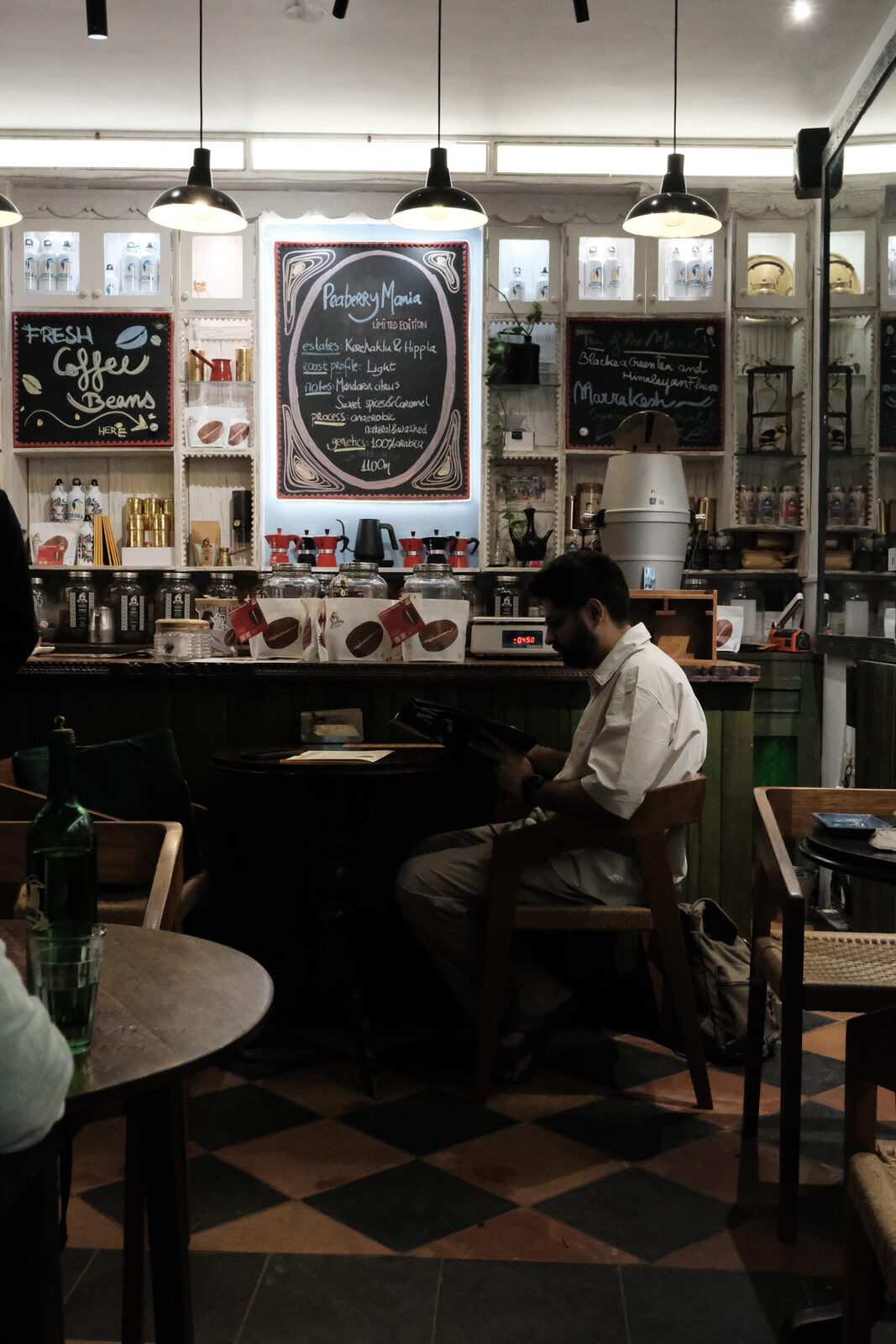
There are a handful of places you keep circling around before you finally sit in them. Marc's Coffees was one of those for us — a name we'd been drinking under someone else's roof for the better part of a year, telling ourselves that next time we're in Puducherry we'd make the trip out to Auroville and see the place for ourselves. This month, we finally did.
The way in was through the city
Long before we made it to the cafe, we'd been drinking Marc's beans on rotation at a local spot in the city that stocks three of their coffees. If you're new to them, that rotation is a pretty good short introduction to the roastery:
- Buma Devi — their robusta blend, and the one that made me first take Marc's seriously. Robusta gets a bad rap because most of what most people have had is bulk-grade filler. In the hands of a roaster who knows what they're doing, it can be bold, chocolate-y, and genuinely delicious. Buma Devi is that argument made in a cup.
- Kaveri — a medium roast Arabica that plays well with milk. It's my default recommendation whenever someone asks me for a bean that "works for lattes and flat whites without being boring".
- Old Kent Estate — also a medium Arabica, but a completely different animal. Brighter, fruitier, slightly acidic. This is the one you want on a Chemex or V60 when you're paying attention.
Three coffees, three completely different jobs. And all three roasted well enough that we started planning the trip.
Walking in
The place is small, warm, and unmistakably itself. Pendant lights over a green counter, chalkboard menus painted with a kind of care that tells you someone lives inside the brand — Peaberry Mania, Fresh Coffee Beans Here, Tea of the Month, each in its own hand — and a small crowd that reads exactly like a well-loved local: regulars catching up in the corner, tourists parsing the menu, a few people who look like they're on their third stop of the morning.
What we noticed straight away — and what still isn't as common in India as it should be — is that the people behind the counter actually knew the coffee. Not in a scripted, memorized-tasting-notes way, but the way people talk about a thing they love. Origin, elevation, process, roast date, what the coffee had been doing that week. We asked a couple of questions and got the kind of answers that make you order more thoughtfully.
The order
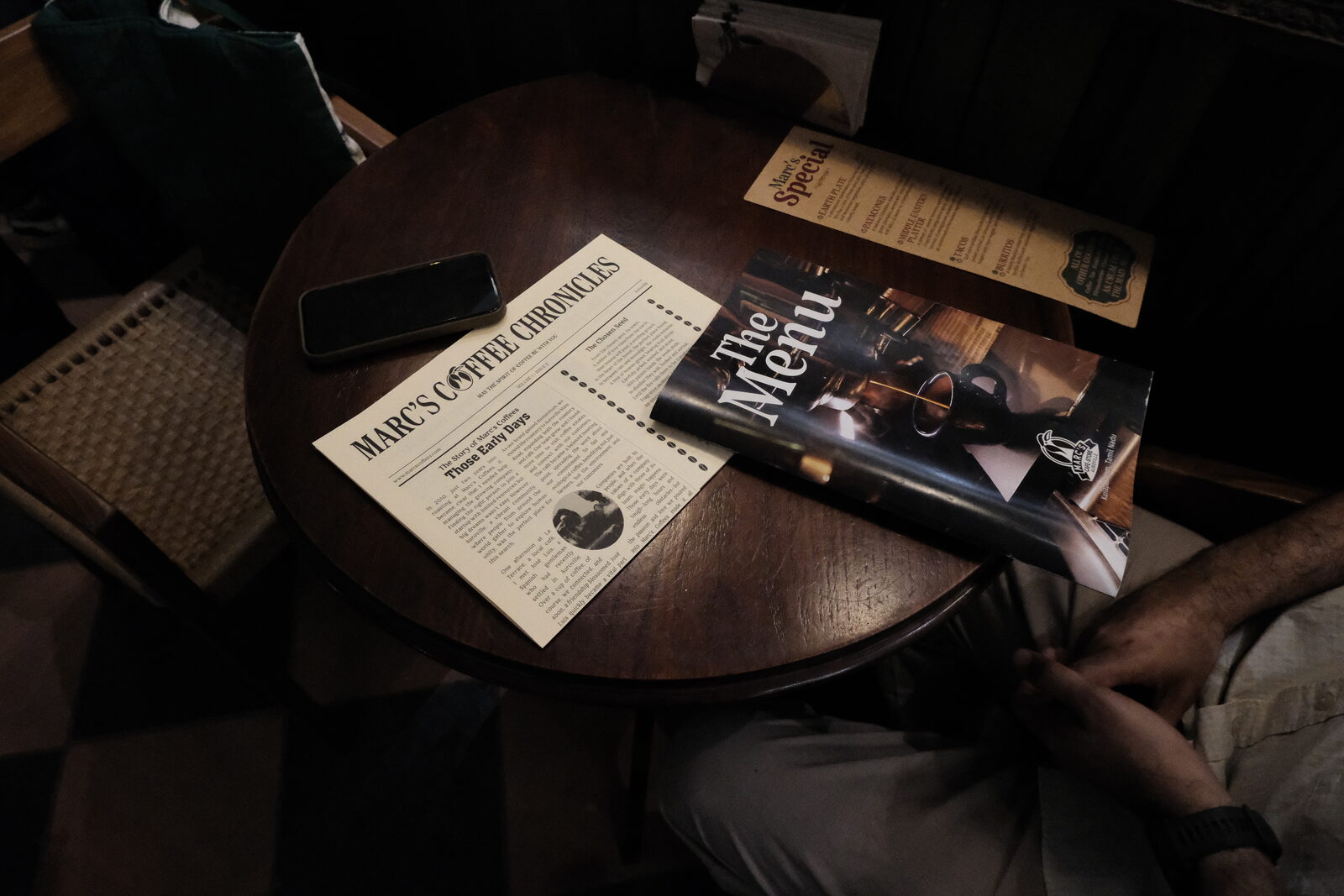
Two pour-overs from two different single-estate lots, and a sourdough sandwich to split. Every table gets its own copy of The Menu, the Marc's Coffee Chronicles zine, and — the detail that made me actually laugh out loud — a coffee puzzle. We killed the ten minutes of brew time trying to solve it, which I think is the highest possible use of ten minutes anywhere.
The pour-overs arrived beautifully composed. Both light roasts, both balanced in the way that light roasts often aren't — you can push a light roast into thin, acidic territory very easily, and it takes a barista who's actually paid attention to their water and their pour to bring out the fruit without the harshness. These did both. Clean, sweet, floral, layered. The sandwich was excellent and did not need to be.
Buying beans
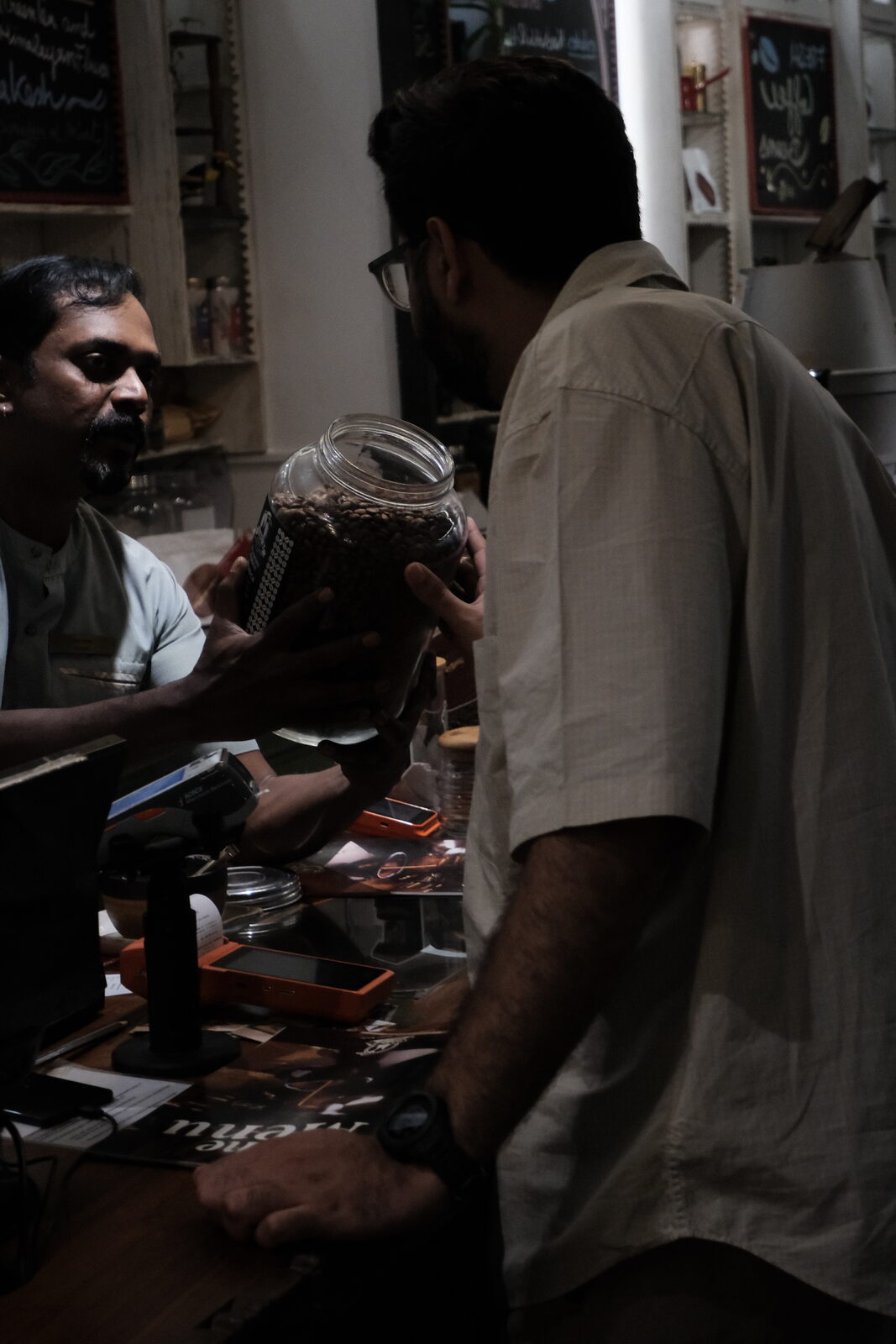
On the way out I asked what they'd just pulled off the roaster. The barista walked me through the jars on the counter one by one — origin, elevation, process, roast level, Agtron numbers scribbled on the labels — and I came away with two light roasts that I've been rationing at home ever since.
- Origin
- Bababudangiri, Karnataka
- Elevation
- 1,400 m
- Genetics
- 100% Arabica
- Process
- Yellow Honey
- Roast profile
- New England / Light · Agtron 73
- Farming
- Fully organic; biodiversity-conservation practices
- The pitch
- Intense, fresh, exotic
- Origin
- Belur, Karnataka
- Elevation
- 1,000 m
- Genetics
- 100% Arabica
- Process
- Red Honey, fermented and barrel-aged
- Roast profile
- New England / Light · Agtron 74
- Farming
- Sustainable irrigation; monsoon-rain harvesting
- The pitch
- The unusual one; barrel-aged honey process shows in the cup
These are on deck for the coming weeks and will get their own write-ups once I've spent real time with each. If you're looking for a hand into Indian specialty from outside the country, either of these is a good place to start.
One more thing worth mentioning
Marc's also runs coffee workshops out of the same space — anything from a single-day intro session to multi-day barista training. If you've been thinking about actually learning how to make a decent cup at home, or you're on the fence about a barista course, this is a much better place to spend the money than most. I don't have a link handy — call ahead or ask at the counter.
If you've been and disagree with any of the above — or you've had one of these coffees somewhere else and want to compare notes — write to me at hello@halfasleep.coffee. Especially if you have thoughts on the barrel-aged Salawara.